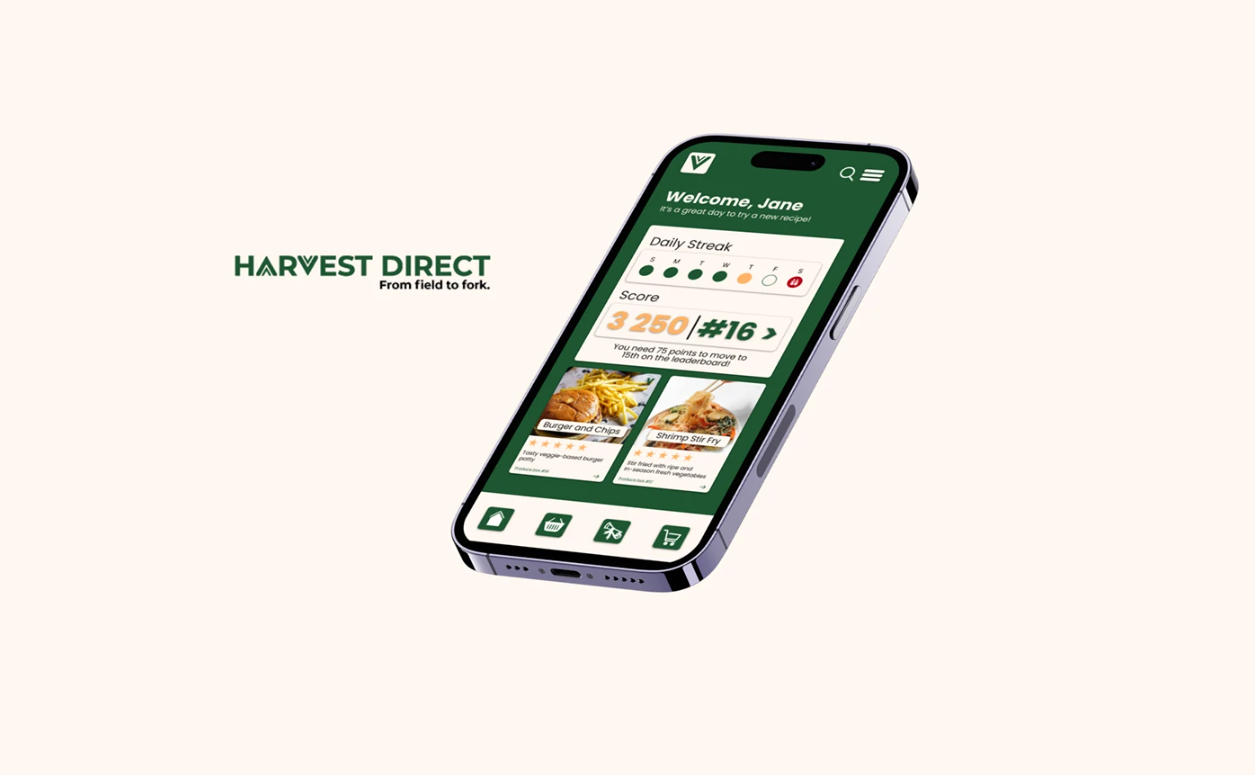
Harvest Direct
Created, from scratch, a complete brand identity, an ideal consumer base, and a mobile shopping application — with a rewards feature, for a company called Harvest Direct, created by the college curriculum.
The Problem
Despite the growing demand for seasonal, organic produce — most existing solutions make the discovery and purchasing experience feel transactional and uninspiring; failing to connect users to the story behind their food. Harvest Direct requires a mobile app that makes buying locally-farmed organic produce feel as warm and inviting as the cooking experiences they unlock — incentivising the consumer as well as aiding the local farms.
The Approach
Harvest Direct was a university project given to us in our final year of study. This meant that the brief and expectations were vast, as well as very closely monitored. The project required us to start from the very beginning. Harvest Direct was simply a name given to us with nothing else tied to it. The brand needed to successfully celebrate and represent local farms and local-grown produce, as well as incentivise the consumer to use it. We needed to create the consumer, the problem, and then frame the brand and app as the solution. This meant that our first step after general research was to create User Personas, as well as the problems these personas would be facing.
Once that was completed, I started with the app functionality and basics of the branding simultaneously. I created a fairly fast logo, without following my normal design process due to time constraints, and picked simple fonts like Montserrat and Poppins to represent the brand. I then had to create a brand guideline including values, a brand mission, and a motto, and then moved on to colours and assets. I settled on a deep natural green, with complimentary orange and beige accents. On the side, I worked to develop the User Flows, as well as simple prototypes for basic app functionality. This was done to receive the green light from my lecturers on the look & feel, and chosen method of incentive, before moving on with my concept. We had very little time to spare on the aesthetics as the UI/UX would require most of our allocated effort.
Once the concept and final ideas were approved, I went ahead with Mid-Fidelity wireframes for all pages and aspects of the app. This part was very time-consuming, but was the most crucial in ensuring the design would be complete and not fall short in any aspects. Creating the final screens was a fairly easy process once all the components and a style sheet were created.
The final deliverables included a detailed documentation of our entire process and all of our research, a brand guideline, a style sheet, a working Figma prototype, mockups, our incentive explained, as well as a Behance presentation of the final outcome.
Progress
Visuals provided for various ‘landmarks’ throughout the duration of the project.
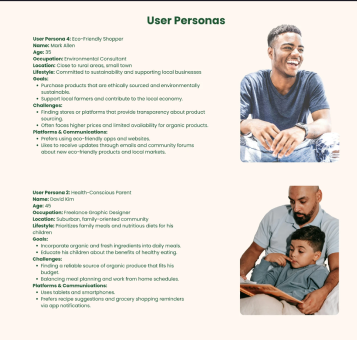
User Personas
Combining my research with some information provided by our lecturers we developed personas that would benefit from our app.
These personas helped us design as a tool for problem-solving, and also ensured we would create something meaningful.
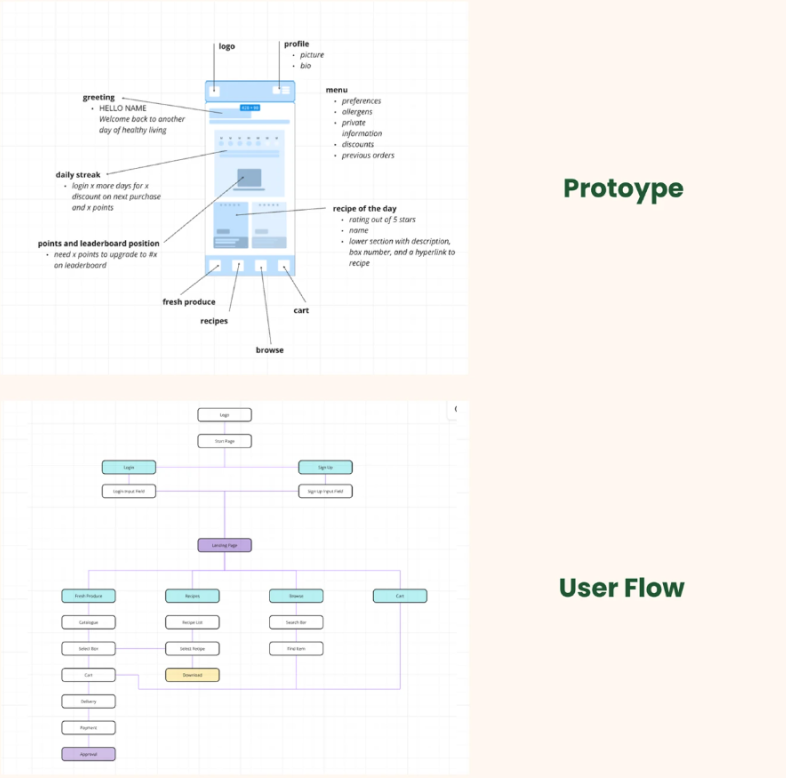
Starting Basic Functionality
While working on the User Flows and establishing the basics of the app's functions and features, I created a prototype of the home page.
This was done to receive a green-light for my concept so I could solidify a foundation before moving forward.
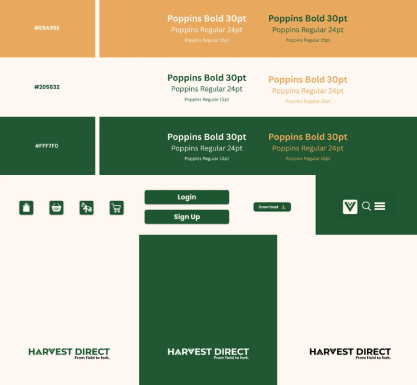
Basic Branding
The branding had to be completed with haste as it was only a secondary to the main deliverable.
The style sheet I used to work from in my Figma document hosted the basic colours, logo, fonts, and most used components.
The Final Screens
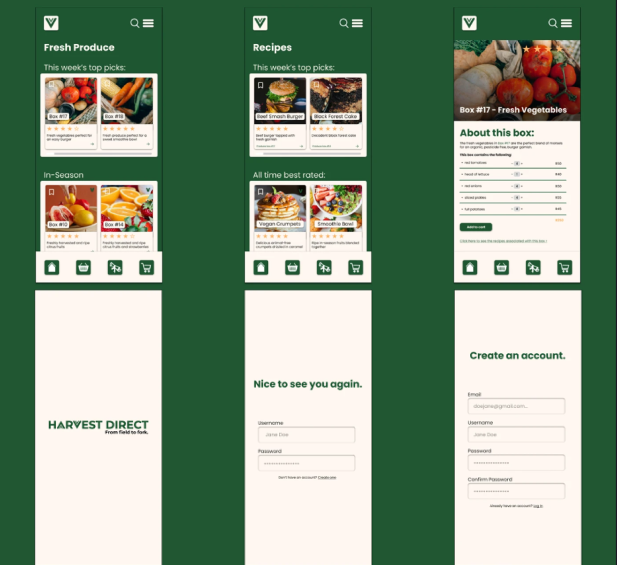
The app focused on produce boxes with associated recipes. The boxes would contain the ingredients to make healthy meals.
While the ‘shopping’ aspect was completed for you to avoid overwhelm, we wanted the user to still be in control.
Outcome
The app I delivered at the end of the 8 week project duration was a reward-based system that used positive reinforcement through earning points in order to encourage healthy and organic eating. The look & feel was healthy, clean, and very easy to use. The brand and app celebrated and encouraged the purchase of locally-grown organic produce.
Recipes & Produce
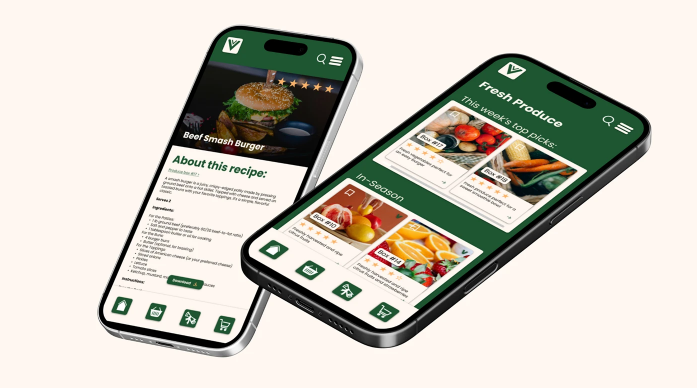
The Recipe pages includes a downloadable PDF, as well as a consumer voted star rating, and a link to recipe boxes with these ingredients.
From there, users are able to browse other boxes or similar recipes and add adjustable quantities easily to their cart.
Rewards System
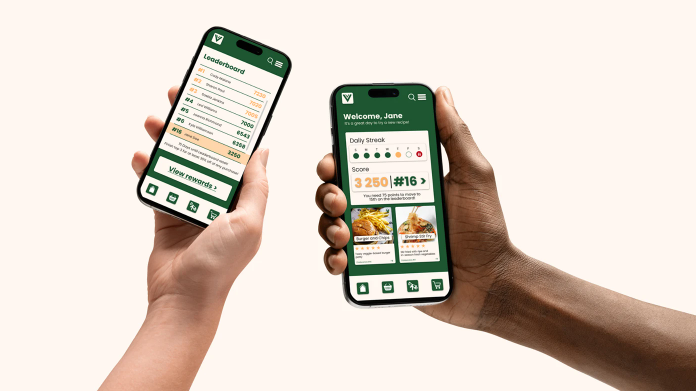
My chosen incentive to keep organic produce and healthy eating relevant was a rewards system through points.
Purchasing and logging in daily would allocate points to the consumer that affected their score on the leaderboard.